
In 1845, the Church decided that West Hill needed a church building of its own as locals had to walk or ride the 2 miles to church in Ottery for Sunday services. The architect of the new church building, George Wollaston, was educated at the Kings Grammar School in Ottery St Mary and went on to work for a distinguished firm in London. His design for St Michael’s is described as having a nave and chancel under the same roof, in the early English style, with Lancet-headed windows, filled with stained glass and a small bell-tower. The oak roof is supported on pointed oaken arches, springing from stone corbels.
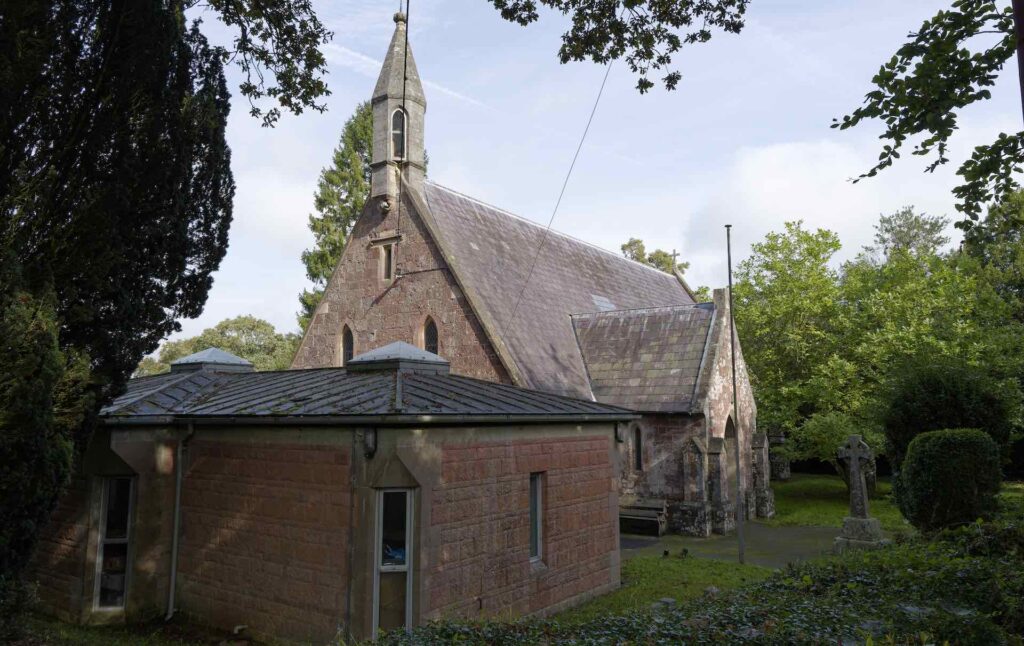
Wollaston estimated the cost of building St Michael’s would be £935 14s 2d. However when the church building was completed in 1846, the total cost including the fixture and fittings had risen to £2000. Thanks to the generosity of two local benefactors, Sir John Kennaway of Escot who gave the land and Sir John Coleridge of Ottery whose family provided more than half of the funds, the additional money was found.
So in 1846 when St Michael’s was finished West Hill became a parish.
The church was originally to be called St Saviours, named after a chapel that once stood by the bridge over the River Otter but because it was finished early it was possible to consecrate it on Michaelmas Day, 29th September 1846. The first priest in charge from that date was Revd James Boles, MA.
St Michael’s churchyard is the resting place of two once internationally famous men.
William Hart Coleridge (1789-1849) was the nephew of Samuel Taylor Coleridge the famous poet. He was educated at the King’s Grammar School, Ottery St Mary and Oxford. He decided to pursue a career in the Church and in 1824 he was consecrated Bishop of Barbados and the Leeward Islands. In 1842 due to failing health he returned to England and took up residence at Salston House. He was an important benefactor of St Michael’s Church, giving the altar for the new church and according to press reports, preaching an impressive sermon on his text from the 48th Psalm at the church’s consecration on Michaelmas Day in 1846.
John William Billiatt (1842-1919) was an Australian explorer, the youngest member of John McDouall Stuart’s expedition of 1861-62, the first to cross Australia from Adelaide on the south coast to Van Diemen’s Gulf on the north coast.
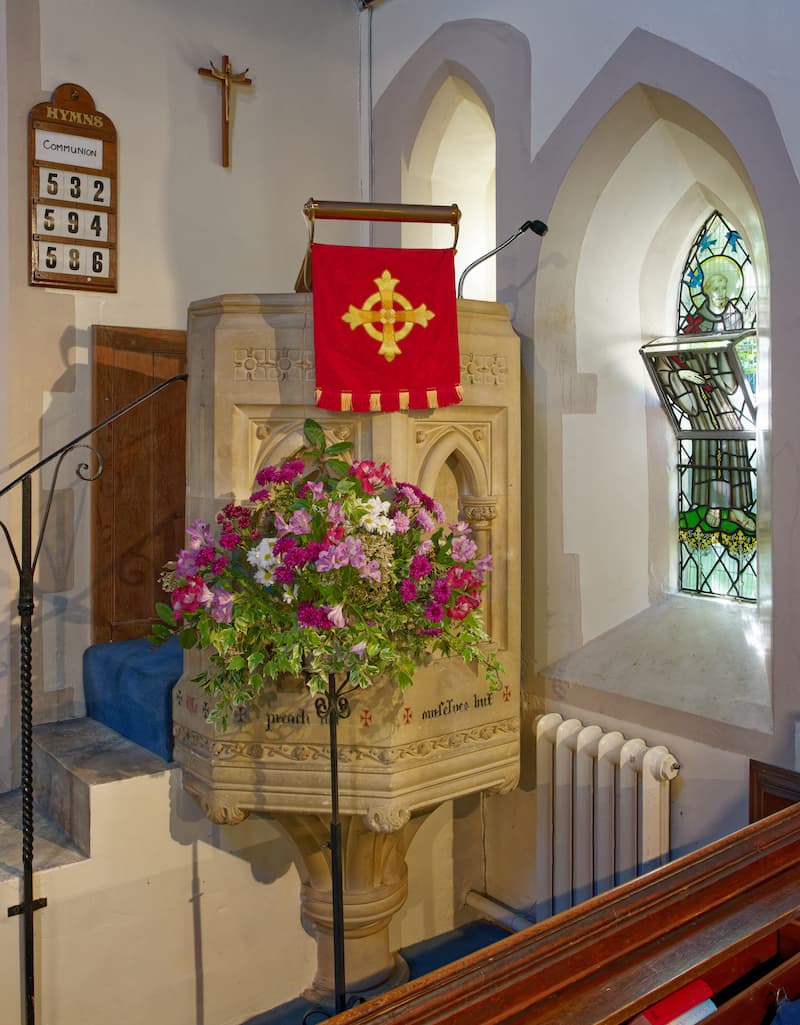
The church building is an example of a complete Gothic Revival church, with stained glass windows by William Wailes and a striking stone pulpit.
In 1978 the Narthex (at the back of the church) was built thanks to the generosity of May Wakeley but sadly by 2003 the roof had started leaking and the building was no longer large enough for many church functions. In that year a successful appeal was launched and the roof was refurbished, the Narthex extended and a new kitchen fitted.